
The Rise of Customized Biodegradable Garbage Bags: Innovation, Materials, and Market Trends
The humble garbage bag—an everyday item found in kitchens, offices, and public spaces worldwide—has undergone a remarkable transformation. Once a simple polyethylene throwaway, it has become a canvas for material science innovation and brand expression. The convergence of environmental urgency, regulatory pressure, and market differentiation has given rise to a growing industry: customized biodegradable garbage bags.
This article explores the materials, technologies, and market dynamics shaping this sector, drawing on global examples from China, Germany, India, Vietnam, and beyond.
The Material Revolution: What Makes a Bag "Biodegradable"?
Not all biodegradable bags are created equal. The term encompasses several distinct material technologies, each with unique properties, degradation mechanisms, and applications.
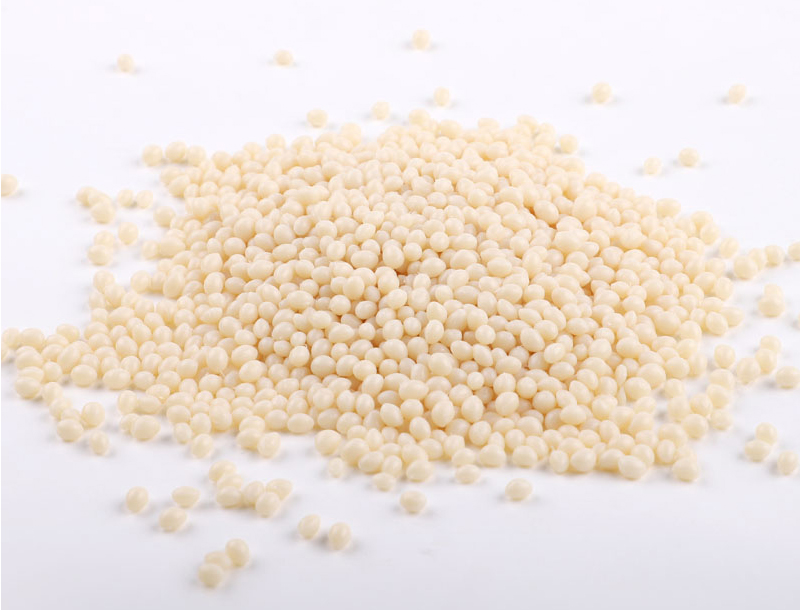
PBAT/PLA/Starch Blends: The Workhorse of Compostable Bags
The most common formulation for biodegradable garbage bags combines PBAT (polybutylene adipate terephthalate), PLA (polylactic acid), and starch . PBAT provides flexibility and strength—essential for bags that must carry weight without tearing. PLA, derived from fermented plant starch (typically corn), contributes rigidity and compostability. Starch, often from corn or potatoes, increases the bio-based content and accelerates degradation .
Manufacturers offer extensive customization within this material family. Bags can be produced in thicknesses ranging from 5 to 200 microns, with sizes tailored to customer specifications, and colors custom-printed using flexographic or gravure printing . Leading producers hold certifications such as OK compost HOME and DIN CERTCO, verifying that their products meet international compostability standards .
Innovative Bio-Based Polymers: Beyond First-Generation Bioplastics
Material scientists continue to push boundaries. The Fraunhofer Institute for Applied Polymer Research IAP in Germany has developed a novel flexible PLA material that overcomes traditional PLA's brittleness. By chemically bonding plasticizers (polyethers) directly to the polymer chain—rather than simply mixing them in—researchers created a material that remains flexible permanently, without plasticizer migration over time .
This innovation, now commercialized by SoBiCo GmbH under the name Plactid®, is at least 80 percent bio-based and can be chemically recycled with considerably less energy input than conventional low-density polyethylene (LDPE). The production process is designed for implementation by medium-sized companies, potentially democratizing bioplastic manufacturing .
In India, UKHI has developed ecogran™, a biopolymer resin made from agricultural waste including hemp, nettle, and flax . This approach addresses a critical criticism of first-generation bioplastics: competition with food production for agricultural land. By utilizing waste materials, ecogran™ offers a more sustainable feedstock while delivering tear resistance and print quality suitable for retail applications. The material runs on existing blown-film extrusion lines, minimizing barriers to adoption for manufacturers .
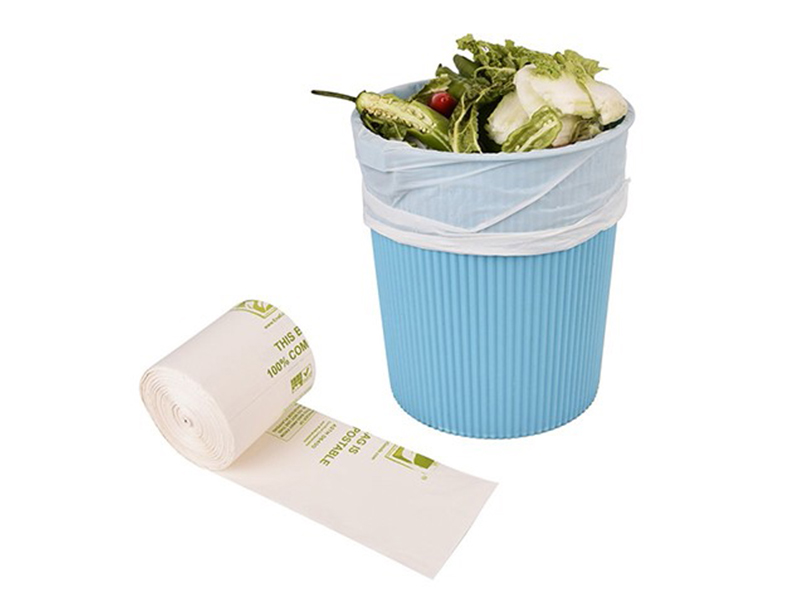
Bamboo-Based Innovation: The "Bamboo instead of Plastic" Movement
China's "bamboo instead of plastic" initiative has spawned novel approaches to biodegradable bags. In Anji County, Zhejiang Province—known as the "Hometown of Bamboo in China"—the state-owned Anji Green Economy Development Company launched a pilot project for bamboo-based fully degradable bags in October 2024 .
The manufacturing process uses bamboo offcuts ground into fine powder, mixed with PBAT and PLA, then processed through extrusion and blow-molding. The resulting bags are thinner and softer than conventional plastic bags yet maintain impressive load-bearing capacity. Critically, they fully degrade within six months under composting conditions, leaving no toxic residue .
Within just four months of launch, the project secured over 40 tonnes of orders from both local and external customers, demonstrating strong market acceptance for this novel material .
Customization Capabilities: Meeting Diverse Market Needs
The garbage bag has evolved from a commodity to a customized product. Manufacturers now offer extensive modification options across multiple dimensions.
Size and Thickness Customization
Biodegradable garbage bags can be produced in virtually any dimensions, from small kitchen bin liners to large construction waste bags. Thickness typically ranges from 11 to 200 microns, allowing customers to select the appropriate strength for their application .
Printing and Branding
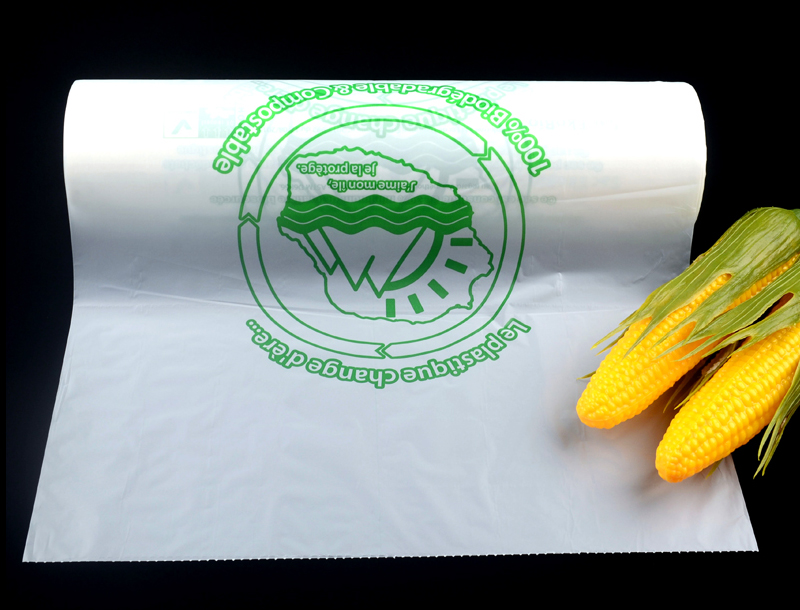
Custom printing represents a significant value-add. Manufacturers offer flexographic and gravure printing with up to eight colors, enabling sharp reproduction of logos, brand messages, and usage instructions . Some suppliers provide comprehensive design services, managing everything from artwork creation to box design .
Specialty Features
Advanced customization extends to functional features: drawstrings for easy closure, star seals for leak resistance, side gussets for increased capacity, and handles for carrying convenience . Some manufacturers offer scented bags or different colors to match branding or waste segregation schemes .
Real-World Innovation: The FEEDitBAG
Perhaps the most imaginative application of biodegradable bag technology is the FEEDitBAG, a 2024 Red Dot Design Award winner developed by Cheil Germany for the Edeka Scheck-in-Center supermarket in Frankfurt .
The bag is made from Mater-Bi, a cornstarch-based material that fully biodegrades within ten weeks. But its genius lies in its embedded functionality: seeds are incorporated into the bag material. After serving as a shopping bag, consumers can repurpose it as a food waste bag. When composted in the garden together with organic waste, the seeds germinate and sprout through the degrading bag material .
The design team, led by Art Directors Rafael Maggessi and Daniel Gumbert, accompanied the launch with point-of-sale materials inviting customers to vote on the next seed motif. The project exemplifies how biodegradable materials can enable entirely new product experiences, transforming disposal into regeneration .
Research and Development: Government-Supported Innovation
Governments are actively supporting biodegradable bag development through research funding. The Vietnam Academy of Science and Technology (VAST) completed a project from 2021-2022 to complete technological processes for manufacturing biodegradable packaging .
Led by Assoc. Prof. Dr. Nguyen Thanh Tung at the Institute of Chemistry, the project produced over 500 kg each of biodegradable food bags, "self-destructing" garbage bags, and shopping bags. These products underwent independent quality testing and were commercialized through the Hapro Mart and Seika Mart supermarket chains in Hanoi . The project also developed four basic standards for these products and secured trademark registration for "Eco-friendly LT green bag," demonstrating the pathway from laboratory research to market reality .
Market Considerations and Challenges
Despite technological advances, biodegradable garbage bags face real-world constraints.
Cost Competitiveness
Biodegradable materials remain more expensive than conventional polyethylene. Manufacturers typically price products higher, though bulk purchasing reduces per-unit costs . As production scales and supply chains mature, price gaps are expected to narrow.
Certification and Standards
Credible certifications are essential for market acceptance. Leading manufacturers obtain OK compost HOME, OK compost INDUSTRIAL, DIN CERTCO, and ISO certifications to validate their environmental claims . These certifications assure customers that products will degrade as advertised under specified conditions.
Infrastructure Limitations
As with compostable coffee packaging, biodegradable garbage bags require appropriate disposal infrastructure. Industrial composting facilities remain limited in many regions. Bags that reach landfills may not degrade as intended due to lack of oxygen, moisture, and microbial activity . Home-compostable certifications address this gap by verifying degradation under typical backyard conditions.
Processing Compatibility
Successful biodegradable bags must run on existing manufacturing equipment. Suppliers emphasize that their materials work on conventional blown-film extrusion lines with minimal modifications, reducing adoption barriers for manufacturers .
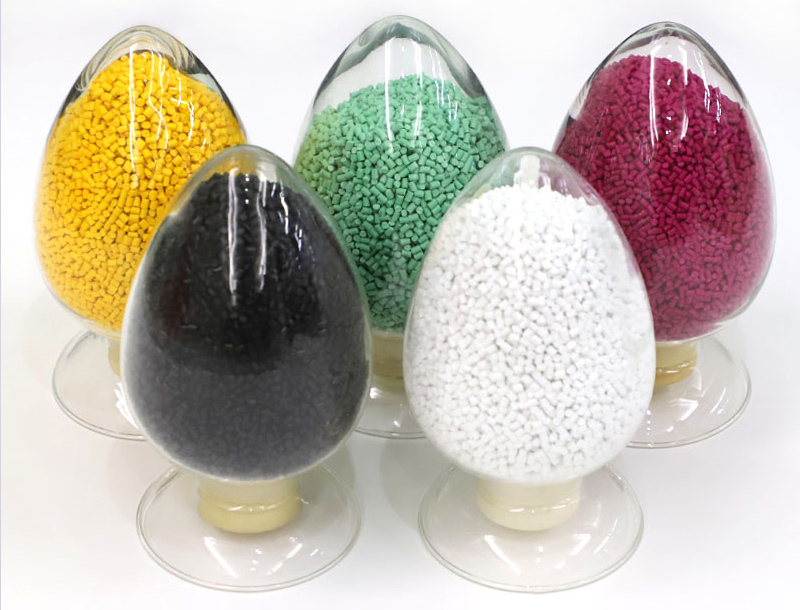
The Customization Process
For businesses seeking customized biodegradable garbage bags, the process typically involves:
-
Specification definition: Determining required size, thickness, volume (liters/gallons), and any special features
-
Material selection: Choosing among PBAT/PLA/starch blends, bamboo-based compounds, or agricultural waste-derived polymers based on performance needs and sustainability goals
-
Design development: Creating artwork for printing, often with manufacturer design support
-
Sampling: Producing samples for testing and approval before full production
-
Certification verification: Ensuring products carry appropriate compostability certifications
Looking Ahead
The customized biodegradable garbage bag market sits at the intersection of multiple powerful trends: rising plastic pollution concern, tightening regulations on single-use plastics, growing corporate sustainability commitments, and advancing material science capabilities.
Innovations like Fraunhofer's chemically modified PLA , UKHI's agricultural waste polymers , and Anji's bamboo-based bags demonstrate that the field continues to evolve beyond simple starch-filled plastics. Meanwhile, creative applications like the FEEDitBAG show how biodegradability can enable fundamentally new product concepts .
For businesses, the ability to customize these bags—with specific sizes, printed branding, and certified environmental credentials—transforms a mundane necessity into a sustainability statement and marketing opportunity. As production scales and costs moderate, customized biodegradable garbage bags are positioned to become not just an eco-friendly alternative, but the new standard.
The waste bag that disappears, leaving either nutrient-rich compost or sprouting plants in its wake, represents a fundamental reimagining of the relationship between packaging and planet. And increasingly, it carries a custom-printed logo.